
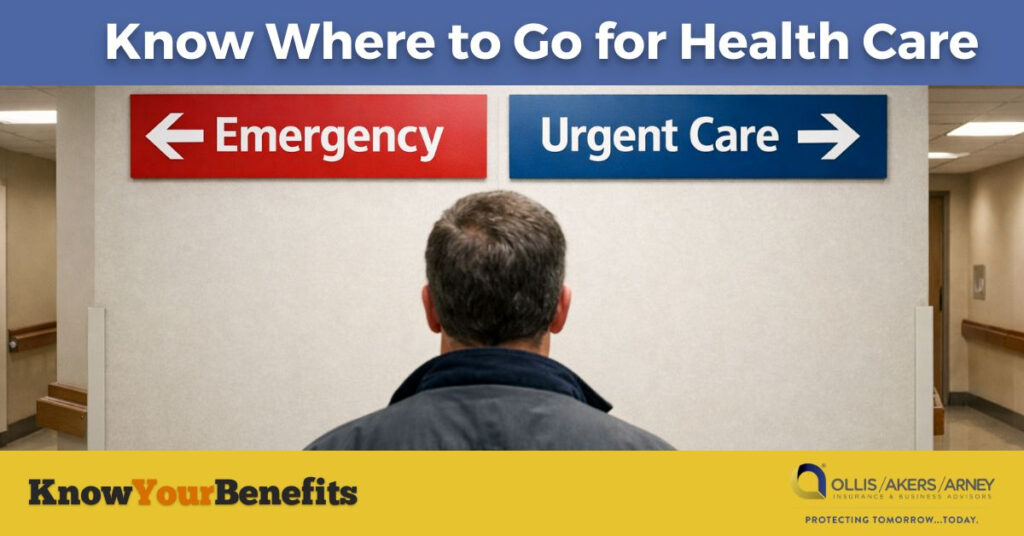
When you get sick or injured, choosing where to go for health care may seem overwhelming. You have many options for care — including the emergency room (ER), urgent care, telehealth and primary care — and each plays a significant role in how quickly and affordably you can get help. Understanding which is best for your situation can empower you to lower your health care costs and confidently choose where to receive the most appropriate care.
This article explains the different health care options available and helps you choose the right one based on your needs, cost and urgency.
ER
ERs and emergency departments are medical facilities designed to treat life-threatening injuries and illnesses that require immediate attention to prevent serious harm, long-term disability or death. A condition is considered an emergency when it may cause loss of life or permanent or severe disability if not treated immediately.
Typically, when you arrive at an ER, a triage nurse checks your vital signs and assesses your symptoms to determine how urgently you need to be seen. Patients with more serious issues are treated first, meaning your wait time may be longer if your condition isn’t life-threatening. Additionally, the cost of care in an ER is usually much higher than that for urgent care, telehealth or primary care.
If you go to the ER for a condition other than an emergency, you may wait a long time and spend more than you would for an urgent care, telehealth or primary care visit.
You should go to the nearest ER when you experience a medical emergency, such as:
- Severe bleeding
- Chest pain or shortness of breath
- Severe abdominal pain
- Uncontrollable bleeding
- Severe allergic reactions
- Deep wounds or major burns
- Seizures
- Head or neck injuries
- Broken bones
- Paralysis
The ER can expedite care when you have a true life-threatening condition or severe or sudden symptoms that require immediate medical intervention. If additional care is needed after ER treatment, you may be admitted to the hospital or referred to another facility.
Urgent Care
Urgent care centers bridge the gap between ERs and primary care, offering prompt medical care for acute conditions. They are generally intended for health conditions that are not life-threatening but shouldn’t wait for a routine primary care appointment. Urgent care centers provide same-day treatment for minor injuries, sprains and strains, infections, fever, and vomiting. Most facilities take walk-ins, but many also offer appointments.
A study by the National Committee for Quality Assurance revealed that nearly one in four adults who utilized the ER did so for nonemergency reasons, highlighting the overuse of emergency departments. Because urgent care centers do not treat life-threatening emergencies, wait times are usually much shorter, and care is often more cost-effective than the ER, helping to reduce unnecessary expenses. Choosing urgent care for noncritical health issues could save you time and money while reducing overcrowding in the ER.
Telehealth
Over the past decade, telehealth has become an increasingly common way to access nonemergency care. As such, many providers now offer versatile digital communication options — video calls and secure messaging platforms — allowing you to receive care conveniently from the comfort of your home.
Not only can telehealth save you time on travel, but it can also expand your options for health care services by making them easily accessible. Typically, telehealth is utilized to treat mild or common conditions that can be verbally described to a provider and do not need a physical exam. Primary care providers may also refill prescriptions and conduct follow-up visits over telehealth. Moreover, some specialists and mental health providers may offer telehealth services and appointments. However, testing and procedures like blood draws, imaging (e.g., X-rays), and physical exams and treatments cannot be performed virtually, so certain services still require in-person visits.
Telehealth is especially beneficial for certain groups of people who may have trouble accessing in-person care, such as:
- Older adults with limited mobility or a lack of transportation
- Individuals who live in rural, remote or underserved areas with limited access to health care providers
- People with disabilities that make travel difficult or make in-person visits challenging
- Patients with chronic conditions that require frequent check-ins
Insurance coverage for telehealth varies by plan. Check your benefits before attending a virtual appointment.
Primary Care
Primary care is the foundation of your long-term health management. Your primary care provider conducts preventive services, such as annual checkups, immunizations and preventive screenings, many of which are covered by insurance plans. They also help you manage chronic conditions like diabetes, high blood pressure and heart disease. Ideally, you should visit your primary care provider at least once a year for a checkup.
Because your provider sees you regularly and gets to know your medical history, lifestyle and health goals, they can catch any changes early and personalize your care. In addition, they are generally the first point of contact when you get sick or injured, as they provide medical advice, treatment and follow-up care for common illnesses and minor injuries. For nonurgent issues such as these, primary care is often the most cost-effective choice.
The Right Care for You
Choosing where you go for health care ultimately depends on your specific needs and symptoms. Health care settings differ not only in the types of conditions and levels of urgency they are designed to treat, but also in costs, as coverage varies by facility type and the care provided. Proactively reviewing your insurance benefits can help you prepare for potential costs, wherever you go.
Being an educated health care consumer can help you make the best decisions so you can get care quickly and affordably. Reach out to HR with any questions about your health care coverage.
This Know Your Benefits article is to be used for informational purposes only and is not intended to replace the advice of an insurance professional. © 2026 Zywave, Inc. All rights reserved.