
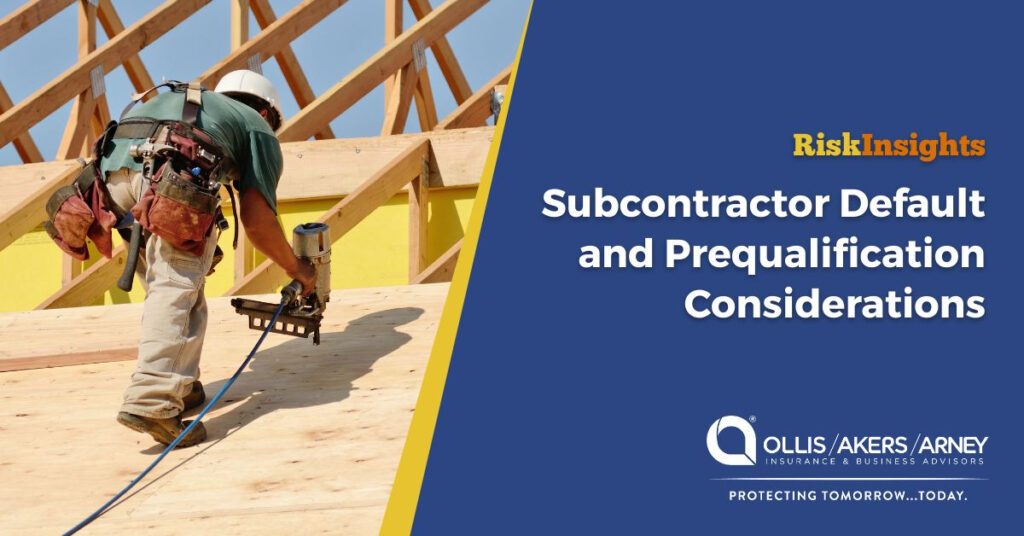
Subcontractor default is a significant risk during any construction project. It occurs when a subcontractor fails to uphold the terms of a project agreement, whether due to financial challenges, resource shortages or poor performance. This can make it considerably difficult for the project owner and general contractor (GC) to finish the job, often causing prolonged scheduling setbacks, cost overruns and potential quality concerns. As such, it’s crucial to identify and manage subcontractor default exposures before they threaten a project. This typically involves prequalification, ongoing performance monitoring and well-structured contracts. This article explains why prequalification matters, offers tips for vetting and monitoring subcontractors throughout a project, and highlights important contract provisions for project owners and GCs to consider.
Why Prequalification Matters
Prequalification is an in-depth process that mainly entails evaluating a subcontractor’s industry qualifications, financial stability, work history, safety documentation and overall capacity before allowing them to take part in a construction project. Implementing a structured prequalification program can help identify and screen out subcontractors that may not be well-suited for a project, reducing the risk of default and related delays, cost concerns and workmanship problems. With thorough prequalification practices in place, project owners and GCs can better identify subcontractors with the financial strength, industry experience and operational capacity necessary for the job before making an award.
Vetting and Monitoring Subcontractors
Proper prequalification requires effective vetting processes. When vetting subcontractors for a project, it’s best for project owners and GCs to assess these key factors:
- Character—A subcontractor’s reputation within the industry matters. Checking certifications, company history, professional references, safety records and litigation history can help confirm their reliability.
- Capacity—A subcontractor’s current workload, staffing levels and access to resources can influence their ability to fulfill project terms. Those who are already taking part in several other projects, have experienced frequent employee turnover or fail to demonstrate adequate supply chain management, may be more likely to exhibit poor workmanship, miss project deadlines and, consequently, default.
- Capital—A subcontractor’s financial ratios and cash flow affect how they perform on the job. Those with limited capital may abuse project funds to settle debts rather than pay staff or purchase essential materials, thereby stalling project efforts and driving up total costs. Unusually low bids or abnormal bid spreads can also signal a subcontractor willing to cut corners and conduct faulty work to stay under budget.
- Coverage—An uninsured subcontractor can leave the project owner and GC financially exposed to workplace injuries, third-party property damage and legal disputes. It’s imperative to confirm that coverage and bonding capacity are active and adequate during bidding and again when work begins.
Even after awarding a project to a subcontractor, it’s vital to engage in continuous monitoring. This may involve refreshing prequalification processes if a considerable amount of time passes before project mobilization or seeking updated financial documentation during a lengthy project; watching closely for early indicators of subcontractor distress (e.g., missed project milestones, inconsistent staff attendance, overbilling or requests for early payments); and keeping an open line of communication between the preconstruction, risk management and field operations teams regarding these indicators to ensure prompt actions are taken.
Important Contract Provisions
Alongside an effective prequalification program, project owners and GCs should consider implementing the following contract provisions to further limit subcontractor default exposures:
- Flow-down clauses—These clauses bind subcontractors to the same duties and liabilities as the GC in a construction project, thus requiring them to take on a certain amount of risk and holding them directly accountable for breaching contract terms (e.g., missing deadlines or failing to meet quality standards).
- Bond and payment certifications—Subcontractors should be required to agree to lien and bond waivers and payment certifications at every tier, thereby preventing them from making claims against the GC or abusing project funding for their own financial gain.
- Termination provisions—A termination for default provision allows the project owner or GC to end a subcontractor’s contract if they fail to perform, and may enable recovery of any added costs of completing the work. Performance expectations, milestones and staffing levels should be defined elsewhere in the contract so a default can be measured against clear terms. A termination for convenience provision, on the other hand, permits the project owner or GC to end a subcontractor’s contract at any time without proving a default. Both of these provisions typically require advance written notice before ending the contract, with the former provision often giving the subcontractor a brief period to attempt to resolve the issue. For maximum protection, it’s usually recommended to implement both of these provisions.
Specific contract needs may vary based on the nature of the project and parties involved. With this in mind, it’s wise to work with trusted legal counsel and insurance professionals to establish appropriate subcontractor requirements and ensure that contract terms align with the project’s risk.
Key Takeaways
Subcontractor default can derail even well-planned construction projects, leading to costly delays and disputes. While proper insurance and bonding are a valuable backstop, they are not a substitute for due diligence. By prioritizing thorough prequalification, maintaining vigilant ongoing monitoring and incorporating strong contract provisions, project owners and GCs can keep subcontractor default exposures to a minimum. Partnering with experienced legal and insurance professionals further strengthens these safeguards, protecting project timelines, budgets and overall success. Contact us today for additional industry-specific risk management guidance.
This Risk Insights is not intended to be exhaustive nor should any discussion or opinions be construed as legal advice. Readers should contact legal counsel or an insurance professional for appropriate advice. © 2026 Zywave, Inc. All rights reserved.